Activity
Keep It Up Fun
Skill: Specialised Sports Coaching
Sports: Volleyball
Technique: Passing
Class: Class 4
Skill: Specialised Sports Coaching
Sports: Volleyball
Technique: Passing
Class: Class 5
Skill: Specialised Sports Coaching
Sports: Volleyball
Technique: Passing
Class: Class 6
Skill: Specialised Sports Coaching
Sports: Volleyball
Technique: Passing
Class: Class 7
Skill: Specialised Sports Coaching
Sports: Volleyball
Technique: Passing
Class: Class 8
Skill: Specialised Sports Coaching
Sports: Volleyball
Technique: Passing
Class: Class 9
Skill: Specialised Sports Coaching
Sports: Volleyball
Technique: Passing
Class: Class 10
Skill: Specialised Sports Coaching
Sports: Volleyball
Technique: Passing
Class: Class 11
Skill: Specialised Sports Coaching
Sports: Volleyball
Technique: Passing
Class: Class 12
Skill: Specialised Sports Coaching
Sports: Volleyball
Technique: Passing
Keep It Up Fun
Learning Outcomes
The main goal is for each player or team to keep the ball in the air by passing it back and forth to one another without letting it hit the ground.
Description Of Activity
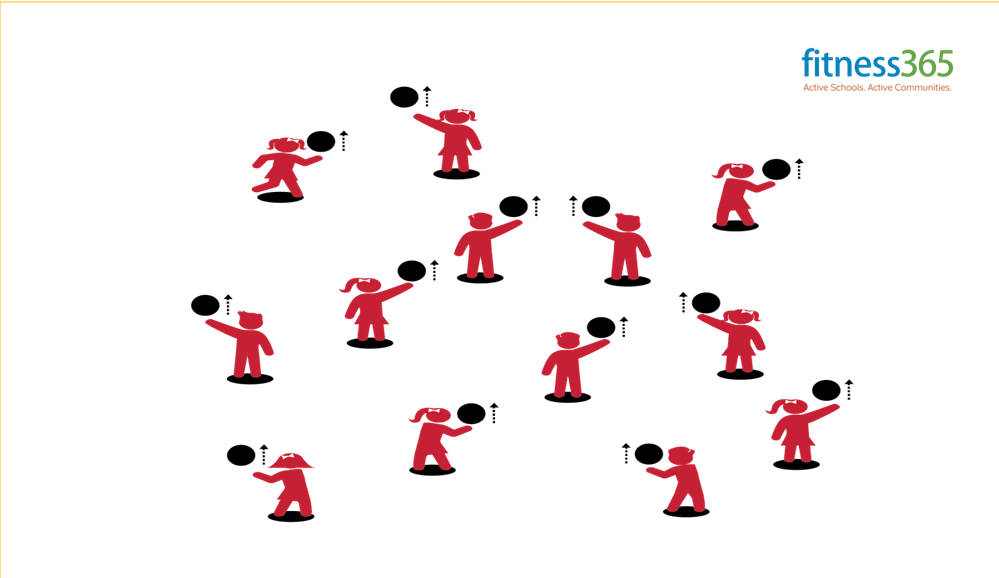
Divide the players into pairs or small teams (ideally 2-4 players per team).
Use a volleyball or a similar lightweight ball.
Players stand in a designated area, such as a court or open space, without a net (unless you're using it as part of the activity).
Players must use their hands to hit the ball (no open-handed or underhand passes).
The ball must be kept in the air by a combination of passes, using bumping, setting, or serving techniques.
Players can only hit the ball once before it must be passed to another player.
If playing as a team, the ball must be passed between teammates; if one player hits the ball, it must go to the next player.
Scoring: If the ball hits the ground or a team misses a pass, they lose a point, or the turn is over. This rule can vary depending on how competitive you want the game to be.
Touch Limits: Teams can aim for a certain number of touches (e.g., 3 or 5) to increase difficulty, focusing on control.
Variations
- Timed Version: Set a timer (e.g., 1-2 minutes) and challenge teams to keep the ball in the air as long as possible. The team with the most successful passes or longest time wins.
- Touch Limits: Limit the number of touches per team (e.g., 3 touches before the ball must be sent back). This encourages better teamwork and faster ball movement.
- Use of Net: For a more structured game, you can introduce a net and play it like a mini-volleyball match, with the goal of sending the ball over to the opponent’s side while keeping it up.
Coaching Tips

- Ball Control: Improves passing and ball control skills, which are essential in volleyball.
- Teamwork: Players need to work together and communicate to keep the ball in the air.
- Hand-Eye Coordination: Enhances hand-eye coordination and timing for passing and receiving.
- Fun and Engaging: It's a simple, low-pressure game that can be enjoyed by players of all skill levels.
Equipment/Material Required
Beach Volleyball