Activity
Catchy Critters!
Skill: Fundamental Movement Skills
Sports: Manipulative Skills
Technique: Catching
Class: Class 2
Skill: Fundamental Movement Skills
Sports: Manipulative Skills
Technique: Catching
Class: Class 3
Skill: Fundamental Movement Skills
Sports: Manipulative Skills
Technique: Catching
Class: KG
Skill: Fundamental Movement Skills
Sports: Manipulative Skills
Technique: Catching
Class: LKG
Skill: Fundamental Movement Skills
Sports: Manipulative Skills
Technique: Catching
Class: UKG
Skill: Fundamental Movement Skills
Sports: Manipulative Skills
Technique: Catching
Catchy Critters!
Learning Outcomes
Develops gross motor skills like catching with proper coordination and body control.
Improves hand-eye coordination and visual tracking skills.
Introduces basic catching techniques in a progressive manner.
Encourages participation and enjoyment in physical activity.
Description Of Activity
Catchy Critters! provides a fun and engaging experience for children of various ages and catching abilities. It incorporates multiple catching activities that progress in difficulty, allowing children to develop their catching skills and confidence at their own pace.
Warm-Up (5 minutes):
Play upbeat music (optional) and encourage children to move around freely with light jumping jacks, arm circles, leg swings, and animal walks (pretending to be animals that catch things).
Introduction (5 minutes):
Gather the children and introduce the balls as fun and friendly critters who love to be caught.
Explain that they will be playing different catching games to learn how to catch with their hands and become catching champions!
Catching Progression:
Two-Handed Catch with Support (Pool Noodles):
Demonstrate a basic two-handed catch with a pool noodle cut in half held horizontally, focusing on cradling the ball with both hands on the noodle.
Have children practice catching the ball with the noodle, focusing on keeping their arms open and cushioning the impact.
Variation: Use brightly colored scarves instead of noodles for a larger catching surface for younger children.
One-Handed Catch:
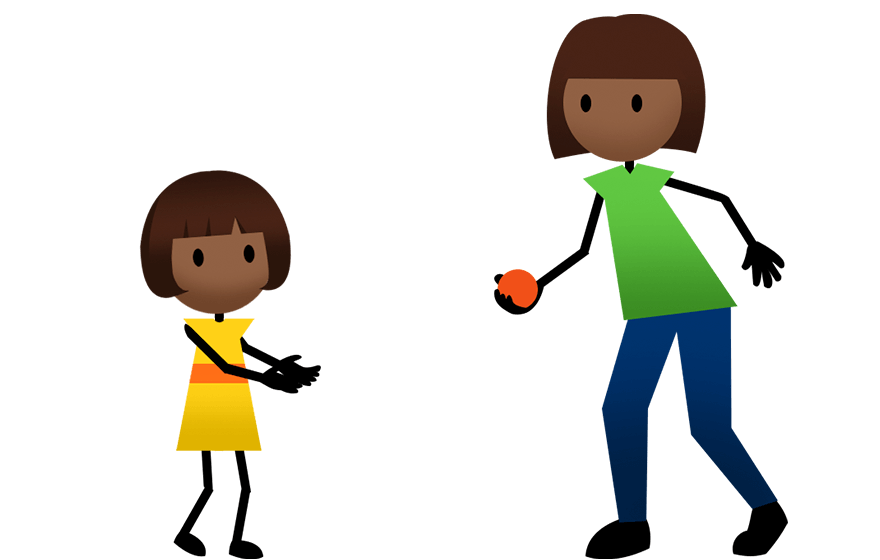
Demonstrate a basic one-handed catch with a softball, focusing on extending one arm forward with an open hand and fingers together to catch the ball thrown by an adult.
Set up cones at different distances and have children practice catching the ball with one hand, encouraging them to reach for the ball and focus on timing.
Ball Toss with Partner:
Divide children into pairs and have them practice tossing the ball back and forth to each other, focusing on catching and throwing gently. This promotes teamwork and communication.
Stationary Catch with Optional Mitts:
Demonstrate a basic stationary catch with two hands for larger balls, focusing on proper footwork (shoulder-width apart) and bending knees to absorb the impact of the catch. Introduce mitts as an optional tool to help with catching.
Have children practice catching balls thrown by an adult from different directions, encouraging them to track the ball with their eyes and adjust their body position for the catch.
Target Practice:
Set up hula hoops or large buckets as targets at varying distances. Children take turns throwing and catching the ball, aiming to land it inside the target. This challenges their catching accuracy and coordination.
Cool-Down (5 minutes):
Play calming music and encourage children to walk around, holding their balls gently. This allows them to cool down and wind down after the activity.
Variations
Catching Relay Race: Divide students into teams and have them catch the ball thrown by an adult at a designated point, then throw it back to the next teammate. This promotes teamwork and friendly competition.
Balloon Catch (Optional): Inflate balloons and have children attempt to catch them gently before they hit the ground. This adds a fun challenge element but make sure to emphasize catching gently to avoid popping the balloons.
Parachute Play (Optional): If you have a large parachute, children can hold onto the edges while adults gently move it up and down. Throwing balls into the parachute and catching them as they bounce back adds a fun element and encourages coordination.
Coaching Tips

Focus on fun and participation, not perfection.
Modify activities based on the age and skill level of the children.
Offer positive reinforcement and celebrate each child's progress.
Ensure enough space for catching without hitting others or objects.
Start with larger, softer balls for younger children and progress to smaller, firmer balls and optional mitts as their skills improve.
Equipment/Material Required
Soft playground balls (various sizes for different age groups)
Pool noodles cut in half (for younger children) or mitts (optional for older children)
Cones (4-6)
Hula hoops or large buckets
Open space large enough for children to move comfortably
Music player (optional)